WELCOME TO
HORSE PWR
SAFETY AND WELFARE IN HORSERACING
Welcome to HorsePWR, British racing’s hub dedicated to the Thoroughbred racehorse, the ultimate equine athlete.
This site is designed to open the doors to the sport and talk about the Thoroughbred – their purpose, the lives they lead, and the high welfare and safety standards that underpin British racing.
We want to provide facts, educate, and confront the tough questions head on. The facts matter. Why? Because we understand our responsibility for our horses.
Purpose. Welfare. Responsibility. That’s HorsePWR.
Horse PWR is brought to you by the British Horseracing Authority (BHA), Great British Racing (GBR) and racing’s Horse Welfare Board (HWB). The platform is supported by the Horserace Betting Levy Board (HBLB).
RACEHORSE BREEDING
Nothing matters more to British racing than the health and wellbeing of our horses. 300 years of careful breeding has developed the Thoroughbred to the elite sporting specimen we see today.
Large hearts, a highly efficient circulatory system, supercharged lung power, spring-like muscle tendons which propel them to high speeds…the Thoroughbred has been selected for its attributes which enable it to run and jump at speeds and over long distances.
Racing gives these athletes a purpose. It’s in their DNA and what they were born to do. From tailored nutrition to state-of-the-art training, every aspect of their development and care is curated to safeguard their health and realise their athletic potential.
There are around 14,000 horses in training at any one time, receiving dedicated care from a team of more than 8,000 racing staff, and the quality of life they lead can be seen in their physical condition on the racecourse.
THOROUGHBREDS DESERVE THOROUGH CARE
From the moment a Thoroughbred is born, expert teams oversee every aspect of their development and care. With more than 16,000 dedicated professionals in British racing and breeding working 365 days a year, the health, safety, and welfare of horses is in the safest of hands.
RISK IN RACING
If a horse falls or is injured during racing, teams of expert vets respond in less than 60 seconds.
Through continuous investment in safety and facility improvements, we've reduced the number of horses that fall by a third, and fatalities to 0.22% of nearly 90,000 yearly runners.
And because every horse matters, we're relentless in our efforts to reduce this even further. Since 2000, £63 million has been invested in cutting-edge research, veterinary science, and education to find new ways to reduce risk and discover safety and welfare breakthroughs.
British racing also works with welfare organisations such as World Horse Welfare. They describe themselves as “critical friends” to the sport, which means they provide honest, frank views on how we can improve our safety and welfare record.
However, like any sport, risk can never be removed entirely for both humans and horses, and there is always more work to be done. British racing is open and transparent about this.
2025
ALL RACING
JUMP RACING
FLAT RACING
RACES
10,123
3,585
6,538
RUNNERS
86,281
28,116
58,176
INDIVIDUAL HORSES
18,049
8,020
10,742
FATAL INJURIES
192
133
59
FATAL INJURY RATE
0.22%
0.47%
0.10%
FIVE-YEAR ROLLING FATAL INJURY
0.22%
0.46%
0.08%
RACES
ALL RACING:
10,123
JUMP RACING:
3,585
FLAT RACING:
6,538
RUNNERS
ALL RACING:
86,281
JUMP RACING:
28,116
FLAT RACING:
58,176
INDIVIDUAL HORSES
ALL RACING:
18,049
JUMP RACING:
8,020
FLAT RACING:
10,742
FATAL INJURIES
ALL RACING:
192
JUMP RACING:
133
FLAT RACING:
59
FATAL INJURY RATE
ALL RACING:
0.22%
JUMP RACING:
0.47%
FLAT RACING:
0.10%
FIVE-YEAR ROLLING FATAL INJURY
ALL RACING:
0.22%
JUMP RACING:
0.46%
FLAT RACING:
0.08%
Note: This data includes all horses fatally injured on raceday or within 48 hours of raceday. British racing is currently working with the industry and in particular trainers to capture full visibility on horses who are fatally injured in training, i.e. away from the racecourse. For more information about safety in horseracing, visit: Making horseracing safer | British Horseracing Authority
LIFE AFTER RACING
RETRAINING AND KEEPING TRACK OF OUR HORSES
Racing’s commitment to horses extends far beyond the track.
An estimated 7,000 horses are marked as leaving training each year. This is made up of:
An estimated 2,000 who take time away from training for rest or rehabilitation but may return to racing
An estimated 2,500 who are permanently retired from racing
An estimated 2,500 who go into breeding or are sold overseas
For those who do leave the sport permanently, British racing has a dedicated aftercare charity, Retraining of Racehorses (RoR), which has created a huge demand for former racehorses to thrive across the spectrum of equestrian disciplines. Due to their versatility, Thoroughbreds are excelling across a range of new careers from show jumping, eventing, and polo, through to enjoying life as a leisure or companion horse.
In 2025, 15,446 former racehorses were registered with RoR, which is 46% of the estimated 33,600 population in Britain. The ambition is to grow this membership significantly.
British racing’s goal is to achieve 100% traceability of racehorses when they retire from the sport. In 2025, racing made strides by facilitating a new data-sharing agreement between the sport and RoR to better support racehorses and help them thrive in their new careers.
Following on from the sport’s 2023 Thoroughbred Census project, racing can say with confidence that around 80% of Thoroughbreds are identifiable and active in their lives beyond the racing industry.
In rare cases where a horse is found to be at risk after leaving the sport, RoR’s welfare safety net provides funding to help that horse find the right outcome. In 2025, this support was required for 121 horses (0.4% of the estimated retired population).
RoR has also developed an aftercare strategy for the sport and is engaging in discussions with the broader industry to secure funding for its implementation.
APPROACHING THE FINISH WITH DIGNITY
For horses for whom euthanasia is required, which can occasionally be the most humane outcome, we are here to help those responsible make difficult but timely decisions. We emphasise that horses must be allowed to retain their dignity to the end, ideally at home.
British racing has in place a euthanasia code of practice to aid trainers and owners with end-of-life decisions. The guidance is clear, if euthanasia is the only option, it should be performed at home or in suitable surroundings.
In addition, British racing introduced a rule from January 2022 that all racehorses that run in Britain must be signed out of the human food chain, meaning they cannot legally be sold to abattoirs, domestically or internationally, for human consumption.
In 2025 this support was required for 121 horses (0.4% of the estimated retired population) out of an estimated Thoroughbred population of 72,300.
For more information on how abattoir figures are compiled and reported, read The Facts here.
RACING’S HORSE WELFARE BOARD
British racing has an independently chaired Horse Welfare Board. In 2020 it published a five-year strategic plan for the welfare of horses bred for racing. This plan has a clear vision, that every horse bred for racing will enjoy a “life well lived”. View a summary of recommendations and projects.
Baroness Minette Batters took over as Chair in 2025 and is overseeing the next evolution of the strategy which will be launched in the Autumn of 2026.
To date, 22 projects have either been completed or are in progress to drive continuous improvement across the sport in the areas of safety, aftercare, traceability, and data. These projects are helping racing identify and minimise risk, improve safety on and off the track, guide the support needed for horses leaving racing and to ensure better traceability throughout their lives. View the latest update on progress from the strategy here.
Examples of progress include an industry-led aftercare review, the creation of a new Welfare Data Unit and Racing Risk Model to use cutting-edge data and analytics to identify and drive down risk, and an equine vision research project that led to all markers on jumps and hurdles on every British racecourse changing from orange to white to drive improved safety.
LIFE OF A RACEHORSE:
FROM FOAL TO FIELD
Learn about the remarkable stages of a newborn foal's development, stretching from their earliest moments to their pursuit of glory on the track, and beyond.
BREEDING
BIRTH AND REGISTRATION
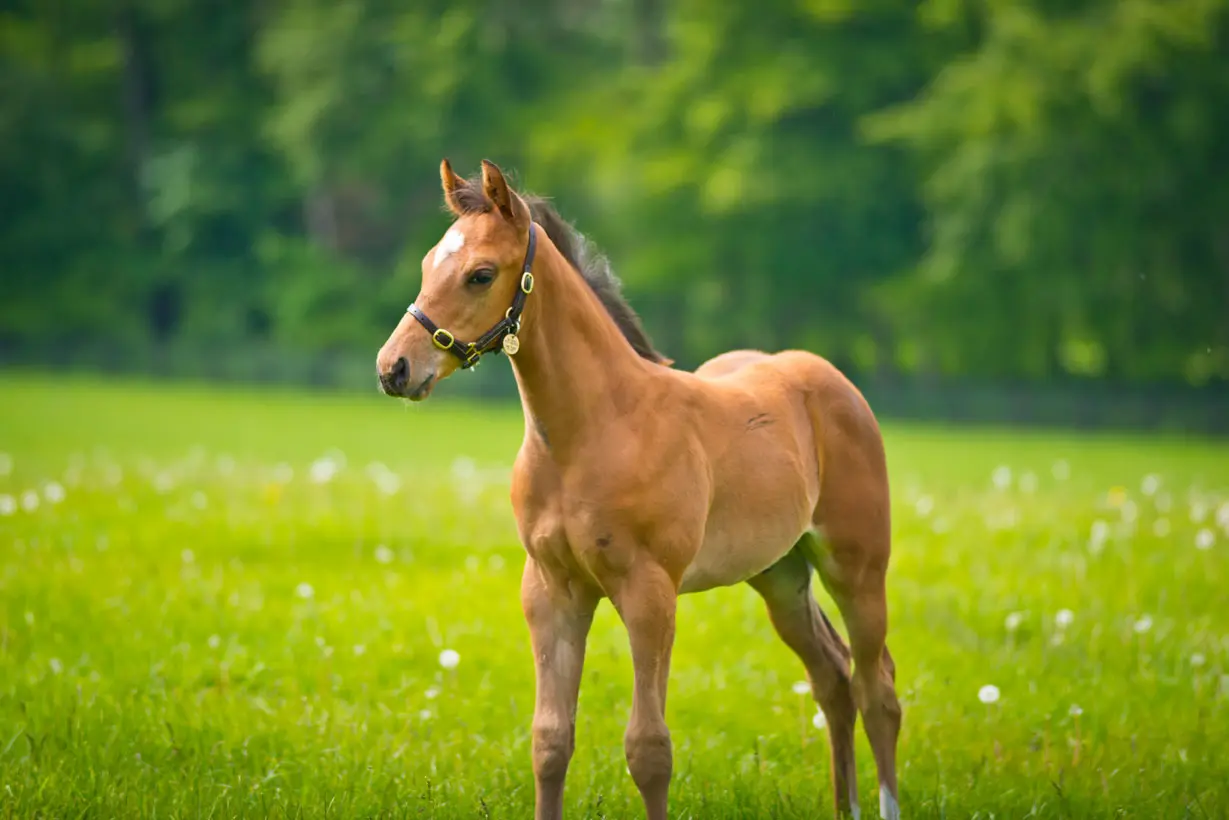
The impressive life of a Thoroughbred horse starts here.
Foals and mares are supported by more than 8,000 people who work in the Thoroughbred breeding industry, ensuring all foals born for the sport immediately come under the care of dedicated staff with first class expertise.
Around 4,000 horses are bred for racing in Britain each year.
Within 30 days of being born, the young foal is officially registered, ensuring the horse is easily traceable and the people responsible for its care are fully accountable.
The foal is fully registered soon after, including recording its distinctive markings, blood DNA typing and microchipping, usually by 31 July of the year in which it was born.
These processes give the sport’s regulator, the BHA, the ability to track their whereabouts, along with being able to access the horse to assess their welfare and test for medications, if needed.
TRACKING HORSES
The British racing industry’s welfare strategy prioritizes traceability to monitor racehorses throughout their lives. The microchipping of horses, alongside the use of equine passports, has been an integral part of identification and tracking for decades.
69% of foals bred for the sport who were born in 2018 entered training, with further studies currently underway.
British racing's ambition is to ensure that the industry has greater traceability on those who do not make it to the racecourse and tracking of the alternative pathways they have taken.
The BHA is developing an all-encompassing database which will combine all the horse’s information and ownership since that initial registration and will continue post-retirement.
ATHLETE IN TRAINING
All Thoroughbreds' care is overseen by licensed trainers who are skilled in providing for the needs and welfare of every horse.
Racing provides horses with an excellent quality of life. From the very best feed and bedding, to regular veterinary care and up to date vaccinations, horses have constant year round care from a dedicated team of professionals.
In addition, regular exercise is an essential part of the life of a Thoroughbred.
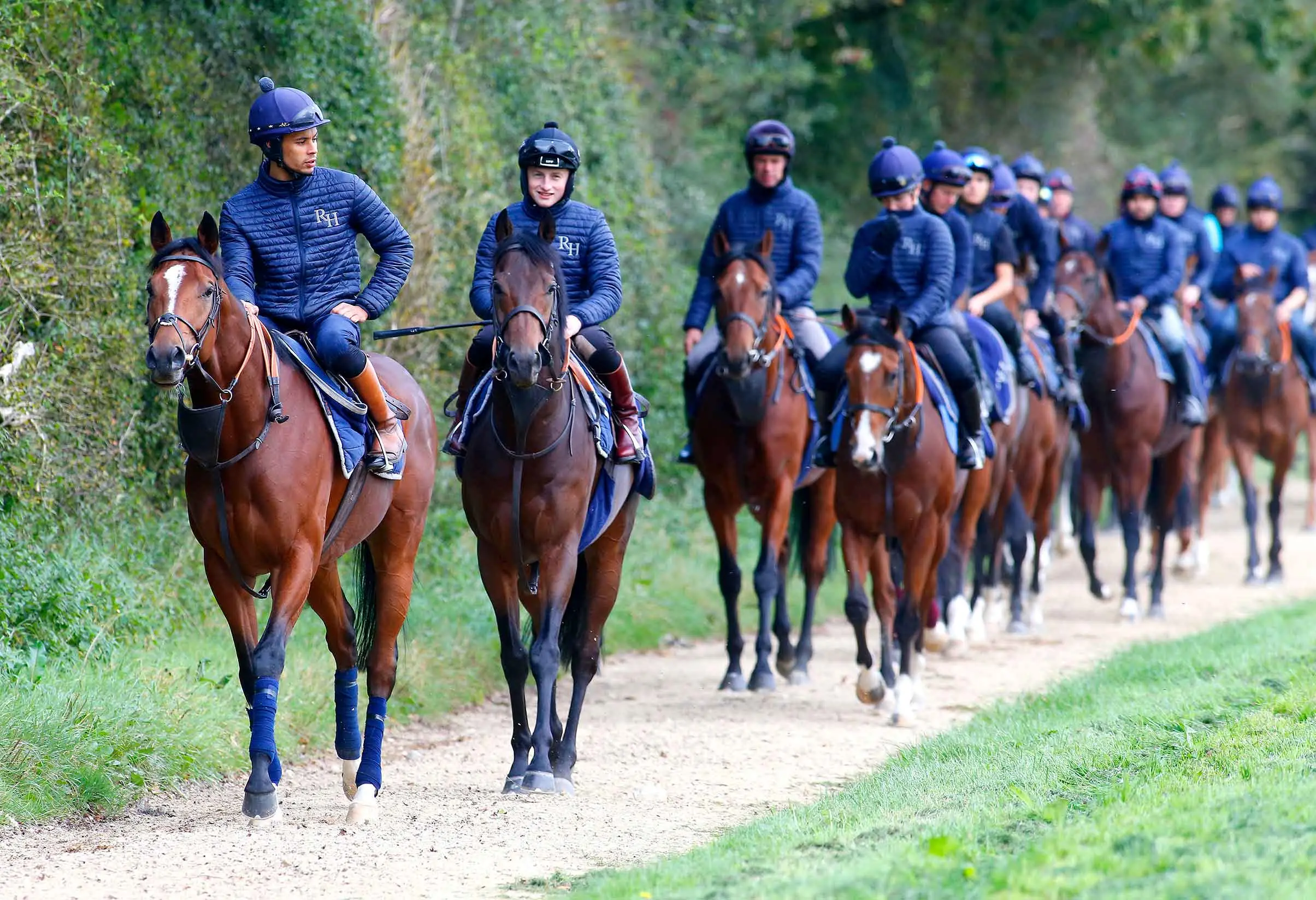
The 14,000 horses in training at any one time are cared for by around 8,000 stable staff. All trainers are licensed to care for them under strict guidelines.
The BHA also regularly visits stables to ensure that the sport's high standards are being met and maintained and the horses are in good condition.
MEDICATION AND DOPING CONTROLS
Our zero-tolerance stance on performance-enhancing drugs means no horses are allowed to be administered such substances under any circumstances.
Moreover, horses will not be allowed to race with any substances or medications in their system at levels which might affect their physiology and overall wellbeing, even if they are substances which are legal and permitted to be given to horses when they are at home.
Regular inspections and detailed vet records ensure compliance.
Testing is comprehensive, conducted both in training yards and on racecourses.
FUELLED TO WIN
Like all elite athletes, a racehorse’s nutrition is key to their health and performance. Their diet is meticulously managed and tailored to each individual’s needs to ensure peak competition readiness. The high-energy demands of racing necessitate proper fuelling and hydration.
A balanced diet high in fats, proteins, fibres, and carbohydrates is essential for their performance.
These nutrients are sourced from a mix of forage, like grass and hay, and grains, including oats, corn, and barley, to maintain their high-performance levels.
5-STAR FACILITIES
Whether at home or on the racecourse, Thoroughbreds are provided with 5-star facilities.
Many trainers’ yards provide facilities such as solariums, swimming pools, walkers and salt spas.
At every racecourse there are veterinary facilities and equipment designed to assist any horse who picks up an injury.
RACING
All racing takes place under the careful supervision of teams of vets. Physical examinations are routine before any race takes place, allowing vets to detect any issues and provide immediate attention.
Vet supervision doesn’t stop before the race. They follow the horses while they are taking part so they can act within 60 seconds for any horse in need, and after every race, each horse is under the oversight of vets and welfare officers who can ensure that there are no concerns before the horse returns home.
From rubberised walkways to comprehensive veterinary facilities, racecourses are designed with equine welfare in mind. All racecourses must meet stringent welfare criteria and are assessed frequently by BHA Inspectors of Courses.
To participate in British racing, all horses must be registered with a licensed trainer.
REST AND RECOVERY
The period of recovery will vary from horse to horse. Some horses thrive on racing frequently, while others are more likely to give their best if each run is followed by a longer period of rest. Every horse’s routine will be bespoke to them, and managed by the trainer.
Horses returning to racing after a long break, or who have raced recently, receive extra checks from the BHA vets.
RETIREMENT & LIFE AFTER RACING
British racing is committed to the care of Thoroughbreds beyond their racing careers. Post-retirement some horses move into the breeding sector, while others excel in different equestrian disciplines such as showing, eventing, dressage, polo and show jumping, or enjoy a quieter life as a leisure or companion horse.
BREEDING
BIRTH AND REGISTRATION
The impressive life of a Thoroughbred horse starts here.
Foals and mares are supported by more than 8,000 people who work in the Thoroughbred breeding industry, ensuring all foals born for the sport immediately come under the care of dedicated staff with first class expertise.
Around 4,000 horses are bred for racing in Britain each year.
Within 30 days of being born, the young foal is officially registered, ensuring the horse is easily traceable and the people responsible for its care are fully accountable.
The foal is fully registered soon after, including recording its distinctive markings, blood DNA typing and microchipping, usually by 31 July of the year in which it was born.
These processes give the sport’s regulator, the BHA, the ability to track their whereabouts, along with being able to access the horse to assess their welfare and test for medications, if needed.
TRACKING HORSES
The British racing industry’s welfare strategy prioritizes traceability to monitor racehorses throughout their lives. The microchipping of horses, alongside the use of equine passports, has been an integral part of identification and tracking for decades.
69% of foals bred for the sport who were born in 2018 entered training, with further studies currently underway.
British racing's ambition is to ensure that the industry has greater traceability on those who do not make it to the racecourse and tracking of the alternative pathways they have taken.
The BHA is developing an all-encompassing database which will combine all the horse’s information and ownership since that initial registration and will continue post-retirement.
ATHLETE IN TRAINING
All Thoroughbreds' care is overseen by licensed trainers who are skilled in providing for the needs and welfare of every horse.
Racing provides horses with an excellent quality of life. From the very best feed and bedding, to regular veterinary care and up to date vaccinations, horses have constant year round care from a dedicated team of professionals.
In addition, regular exercise is an essential part of the life of a Thoroughbred.
The 14,000 horses in training at any one time are cared for by around 8,000 stable staff. All trainers are licensed to care for them under strict guidelines.
The BHA also regularly visits stables to ensure that the sport's high standards are being met and maintained and the horses are in good condition.
MEDICATION AND DOPING CONTROLS
Our zero-tolerance stance on performance-enhancing drugs means no horses are allowed to be administered such substances under any circumstances.
Moreover, horses will not be allowed to race with any substances or medications in their system at levels which might affect their physiology and overall wellbeing, even if they are substances which are legal and permitted to be given to horses when they are at home.
Regular inspections and detailed vet records ensure compliance.
Testing is comprehensive, conducted both in training yards and on racecourses.
FUELLED TO WIN
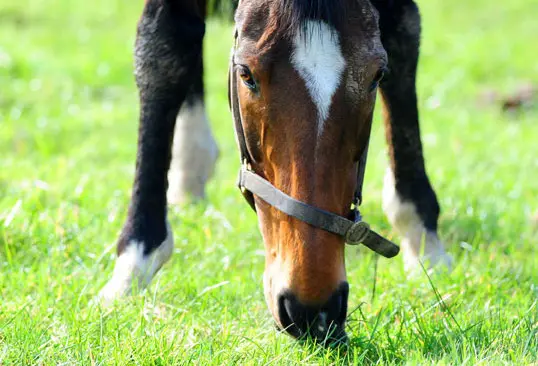
Like all elite athletes, a racehorse’s nutrition is key to their health and performance. Their diet is meticulously managed and tailored to each individual’s needs to ensure peak competition readiness. The high-energy demands of racing necessitate proper fuelling and hydration.
A balanced diet high in fats, proteins, fibres, and carbohydrates is essential for their performance.
These nutrients are sourced from a mix of forage, like grass and hay, and grains, including oats, corn, and barley, to maintain their high-performance levels.
5-STAR FACILITIES
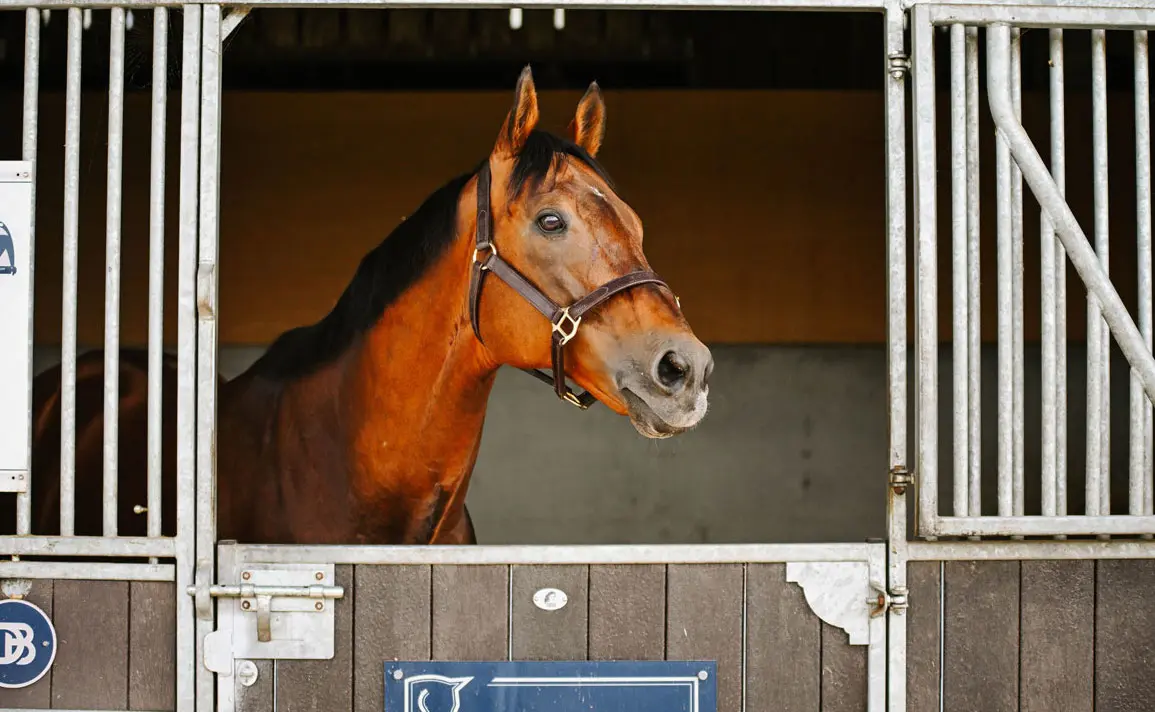
Whether at home or on the racecourse, Thoroughbreds are provided with 5-star facilities.
Many trainers’ yards provide facilities such as solariums, swimming pools, walkers and salt spas.
At every racecourse there are veterinary facilities and equipment designed to assist any horse who picks up an injury.
RACING
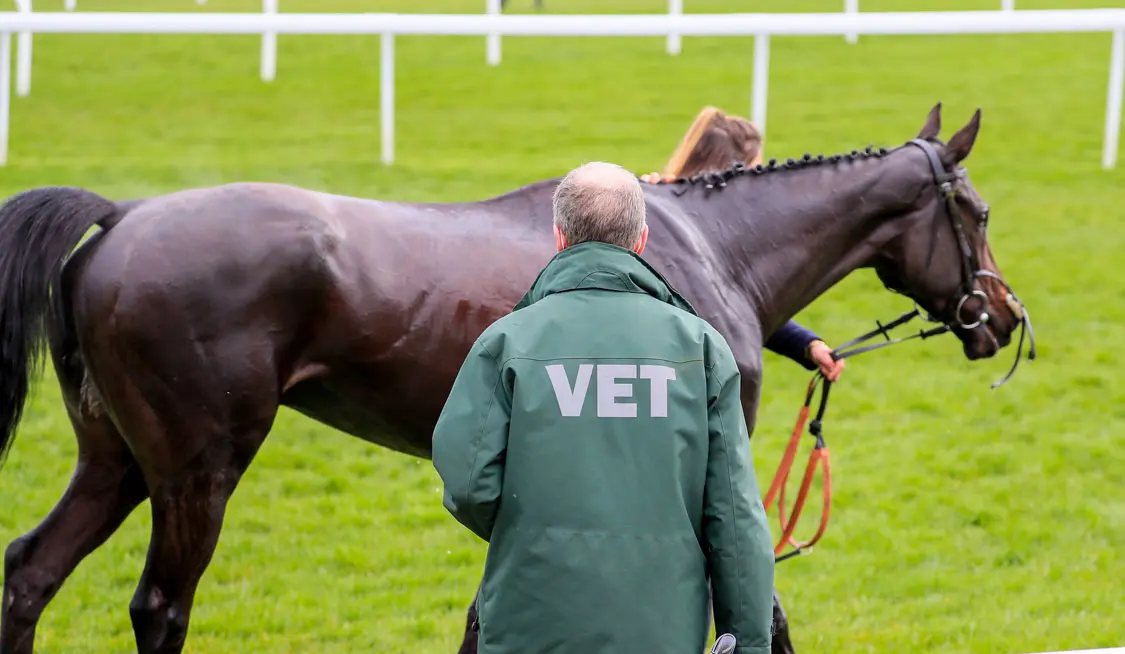
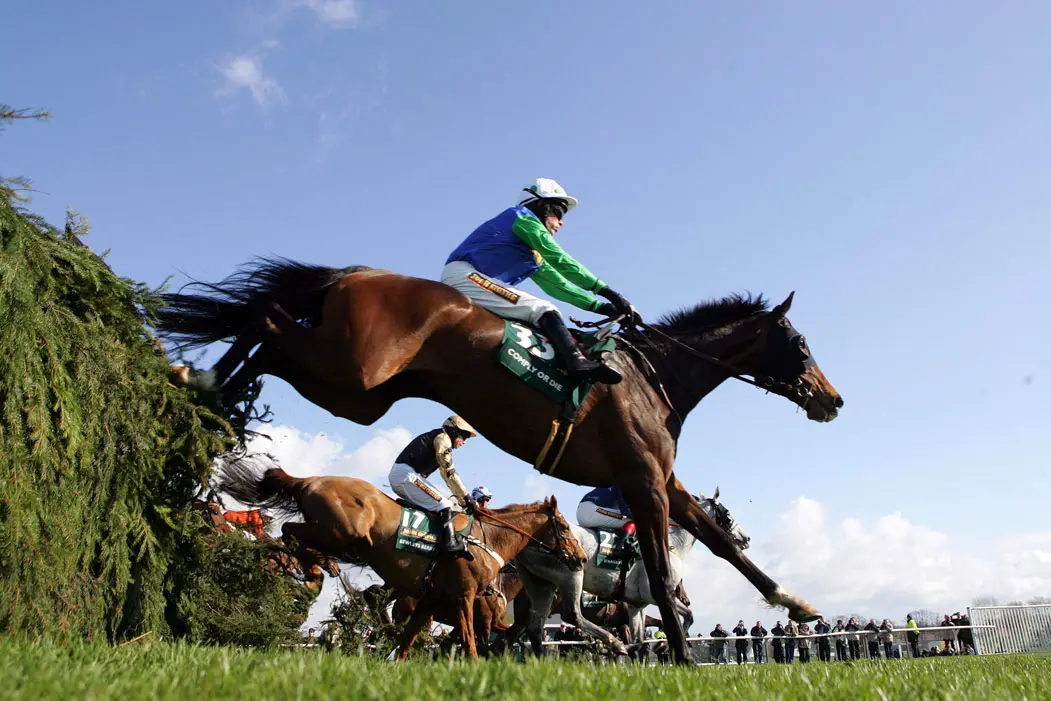
All racing takes place under the careful supervision of teams of vets. Physical examinations are routine before any race takes place, allowing vets to detect any issues and provide immediate attention.
Vet supervision doesn’t stop before the race. They follow the horses while they are taking part so they can act within 60 seconds for any horse in need, and after every race, each horse is under the oversight of vets and welfare officers who can ensure that there are no concerns before the horse returns home.
From rubberised walkways to comprehensive veterinary facilities, racecourses are designed with equine welfare in mind. All racecourses must meet stringent welfare criteria and are assessed frequently by BHA Inspectors of Courses.
To participate in British racing, all horses must be registered with a licensed trainer.
REST AND RECOVERY
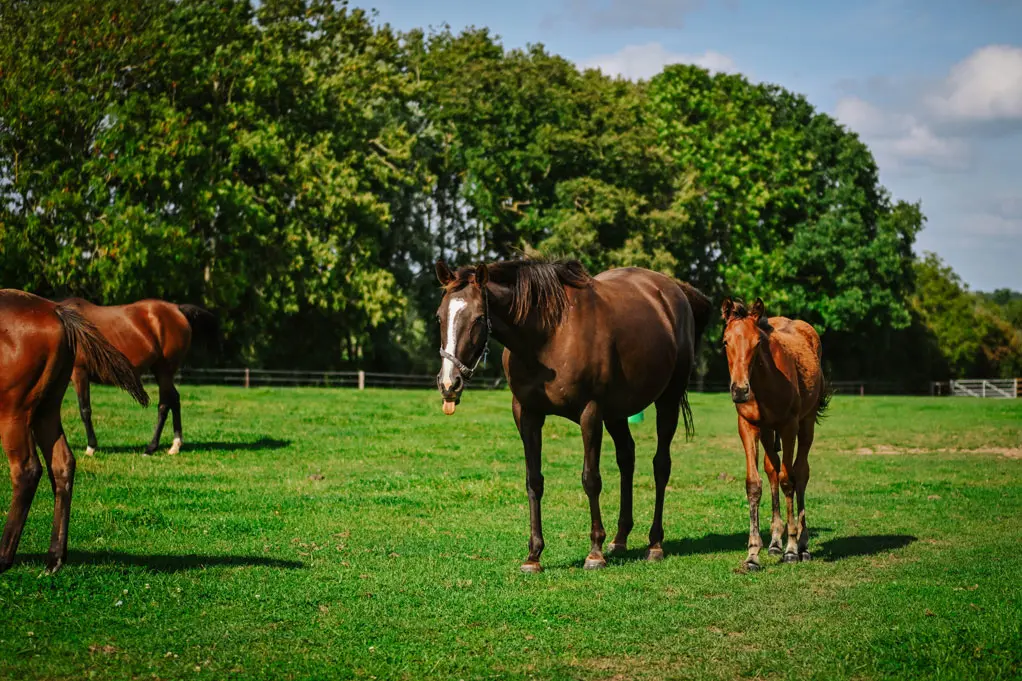
The period of recovery will vary from horse to horse. Some horses thrive on racing frequently, while others are more likely to give their best if each run is followed by a longer period of rest. Every horse’s routine will be bespoke to them, and managed by the trainer.
Horses returning to racing after a long break, or who have raced recently, receive extra checks from the BHA vets.
RETIREMENT & LIFE AFTER RACING
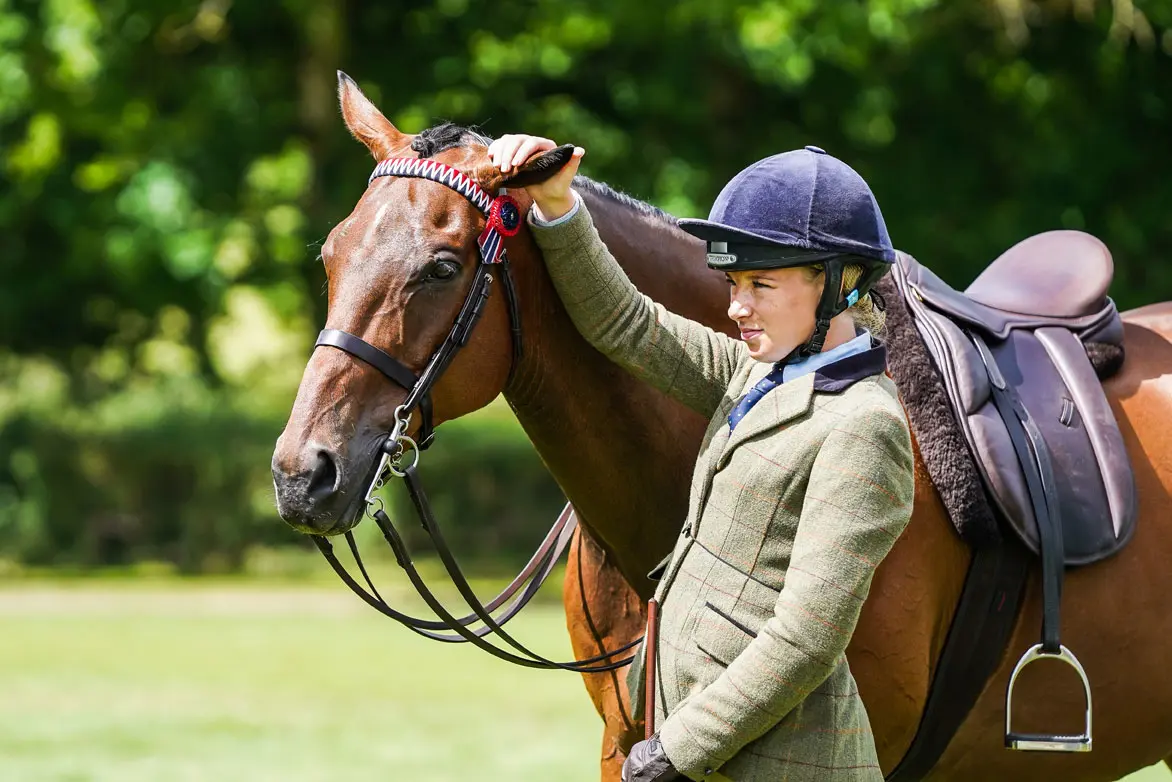
British racing is committed to the care of Thoroughbreds beyond their racing careers. Post-retirement some horses move into the breeding sector, while others excel in different equestrian disciplines such as showing, eventing, dressage, polo and show jumping, or enjoy a quieter life as a leisure or companion horse.
THE RULES
Our rules are there to protect the welfare of the sport’s participants and ensure a level playing field and are regulated by the British Horseracing Authority (BHA).
The rules include strict requirements on how horses should be ridden during a race to ensure their welfare.
Also written into the rules of the sport are the responsibilities of everyone involved in the sport to ensure that they act in the best interests of horses at all times.
A whistleblowing hotline RaceWISE allows anyone working or involved with racing to anonymously report breaches of the rules or concerns about the wellbeing of the sport’s participants, human or equine, ensuring the highest integrity across the sport.
PRE AND POST-RACE CHECKS BY VETS
All racing takes place under the careful supervision of a team of vets to ensure each horses’ welfare and wellbeing and it’s suitable to race.
Physical examinations are routine before races, allowing vets and experienced horse people to detect any potential issues and provide immediate action and attention.
Horses are also assessed after their races, to ensure any issues can be identified and acted on.
A TEAM OF VETS ALWAYS 60 SECONDS AWAY
Vets follow races as they happen and must be able to attend to any horse within 60 seconds.
A minimum of three vets are required to be on hand at a racecourse for every flat race meeting that takes place in Britain each year. This rises to four for a jumps race meeting, and many more will attend the larger fixtures.
REGULAR INSPECTIONS TO UPHOLD STANDARDS
Stables and tracks must adhere to high standards, with regular inspections to ensure compliance.
THE WHIP
New, strict regulation around the whip was introduced in 2023, ensuring that the use of the padded ProCush whip for safety and encouragement is tightly controlled, with thresholds for use set at very low levels.
Since these rules were introduced they have been breached on only 0.59% of rides, or just over one in every 200 rides.
COLLECTIVE WELFARE RESPONSIBILITY OF OFFICIALS
BHA and racecourses officials work closely together and are tasked with safeguarding the welfare of the horses and to ensure the highest horse welfare and safety standards across the whole racecourse.
FREQUENTLY ASKED QUESTIONS
Questions need answers. And the facts matter. These are some of the areas British racing gets asked about.
WHAT HAS RACING DONE TO IMPROVE HORSE WELFARE?
Racing has a clear and moral responsibility for the racehorse at the heart of the sport. Racing is one of the most regulated animal activities in the world and strict measures are in place to ensure the welfare of horses.
British racing has made huge strides to continuously improve safety, welfare, and transparency. More than £63 million has been invested since 2000 to advance veterinary science, research, and education. This work benefits all breeds of horses.
In 2019, the sport created an independently chaired Horse Welfare Board which published a five-year strategic plan for the welfare of horses bred for racing. 26 projects were identified and are underway to drive continuous improvement across the sport. Racing’s clear ambition is for every horse bred to race to lead “a life well-lived”.
Examples of progress include an industry-led aftercare review, the creation of a new Welfare Data Unit to use cutting-edge data and analytics to identify and drive down risk, a data-sharing agreement between the sport and charity RoR to improve traceability, and an equine vision research project that led to all markers on jumps and hurdles on every British racecourse changing from orange to white to drive improved safety.
Alongside these major research and development projects, the sport adopts an approach of ongoing review and improvement, with data and evidence constantly being evaluated. This process results in changes frequently being made to racecourse and stable design and standards, ranging from minor adjustments to major overhauls, if needed.
British racing also works with welfare organisations such as World Horse Welfare. They describe themselves as “critical friends” to the sport, which means they provide honest, frank views on how we can improve our safety and welfare record.
Baroness Minette Batters took over as Chair in 2025 and is overseeing the next evolution of the strategy which will be launched in the Autumn.
IS RACING SAFE FOR HORSES?
British racing is relentless in the continuous improvement of safety and welfare for horses in our sport. 99.75% of all horses that run in races return home safe, and 99.5% of horses complete their race without sustaining any form of long-term injury.
Racing does involve risk, but fatalities in British racing as a proportion of runners is extremely low.
In 2025, 0.22% of all runners in both flat and jump racing experienced fatal injuries (192 horses from 86,300 runners).
Extracting just jump racing, the fatal injury rate is 0.47% (2025: 133 horses from 28,116 runners).
In flat turf racing the fatality rate is 0.10% of runners (2025: 59 from 58,165 runners). The fatality figure for flat racing includes 33 horses from 33,004 runners on turf and 26 horses from 25,161 runners on all weather tracks – total of 58,165 runners.
Every single fatality matters, and racing investigates each and every one.
Research projects are constantly underway with experts from top-flight, independent institutions like the Royal Veterinary College (RVC) to identify areas where risk can be reduced and safety improved.
As an example of this work, racing’s research into equine vision with Exeter University showed that horses could see white more clearly than orange against a fence. As a result, in 2022, all markings on all jumps across Britain were changed from orange to white.
There have been changes made to the jump materials too. RVC research showed that changing from traditional birch hurdles to padded-style hurdles could lower the risk of horses falling by 11%. As a result, over 90% of British racecourses have switched to padded hurdles, with all courses due to have these in use by 1 October 2026.
SHOULD JUMP RACES TAKE PLACE ON VERY SOFT OR HEAVY GROUND?
In actual fact the data shows that the softer the ground, generally, the safer jump racing is. This is because the soft ground reduces speed and cushions falls. Data collected from 2013 – 2023 for jumps races shows the following fatality rates for races on different types of going.
Heavy: 0.22%
Soft: 0.33%
Good to Soft: 0.43%
Good: 0.51%
Good to Firm: 0.58%
Sometimes jump races on heavy going might see fewer horses complete the race, but this is simply good welfare practice. Jockeys will pull up tired horses to ensure they are not stretched beyond their limits.
WHY IS THE WHIP USED?
Thoroughbred horses are powerful, weighing half a tonne and capable of reaching speeds of up to and over 40 miles per hour.
To ensure the safety of both horse and rider, and to ensure that horses can give their best, jockeys use a lightweight, foam-padded whip, designed in collaboration with industry experts and external welfare advisors.
It is used to guide, focus, encourage, and maintain control and safety during races, acting as a means of communication between rider and racehorse. Use is extremely limited and there are strict rules which are rigorously enforced and include disqualification.
The rules are that jockeys can use the whip a maximum of six times in a flat race or seven times in a jump race. A jockey’s arm cannot go above shoulder height, and it can only be used on two places on a horse’s body – the shoulder and hindquarters. When being used on the shoulder the whip can only be used in the backhand position.
In 2025 they were breached in 0.59% of rides, significantly less than one in every 100 rides.
DOES THE WHIP HURT HORSES?
The whip used in racing was designed in collaboration with industry experts and external welfare advisors. It is a foam-padded, energy-absorbing "ProCush" design that comprises a composite spine with a polymer surround, encased in dense foam padding. It is designed to be lightweight and create a loud noise on impact.
While studies have taken place around the welfare impacts of the whip, scientific evidence remains inconclusive.
Therefore, in order to ensure welfare is safeguarded, strict regulations govern the frequency, force, jockey technique and where on the horse’s body the whip can be used. The whip must also never be used to coerce a horse. Stringent penalties are in place and enforced for any breaches of the rules.
More independent research is being commissioned in regards to this question.
WHAT HAPPENS WHEN A HORSE FALLS?
The latest faller rate in jump racing is 1.98% of all runners. This figure has decreased substantially in the last 20 years due to ongoing safety initiatives.
In the event of a horse falling during a race, immediate veterinary attention is available within 60 seconds if needed.
Most falls do not result in injuries. However, when a horse falls, green screens are often put up around them or around the rider to give them and the attending medical professional privacy and space to carry out their assessments.
If a horse does need further assistance, specialist equipment is on hand to stabilise and make the horse as comfortable as possible, and equine ambulances are available for immediate transportation to veterinary facilities at the racecourse or to an equine hospital for the necessary evaluation and care.
WHY CAN SOME HORSES NOT BE SAVED WHEN THEY ARE SERIOUSLY INJURED?
Because horses cannot stay off their feet for long periods due to risk of serious illness and other welfare concerns, broken bones often do not have a chance to heal. As a consequence, sadly, the kindest way to help a horse with a broken limb is often to put them down.
Vets carefully assess each situation and, in consultation with owners and trainers, may recommend euthanasia if it is deemed the most humane option.
The decision prioritises the horse's welfare so that they do not suffer unnecessarily.
Maintaining a suitable quality of life is a key consideration when considering future options for a horse that has had a serious injury or condition.
HOW ARE RACEHORSES PUT DOWN ON COURSE?
If a horse does have to be put down, it is done in a quick and painless way, by a trained veterinary surgeon. The only permitted method is by injection.
Any decision is taken by the team of veterinary surgeons. Where appropriate this will be done in consultation with the owners and trainer of a horse.
WHAT IS THE GRAND NATIONAL?
The Grand National is Britain's most famous horserace, run over unique, specially-designed fences at Aintree Racecourse, and is a spectacle watched by millions of people worldwide.
The race is run over a distance of 4 miles 2 ½ furlongs and 30 iconic fences, which were redesigned in 2012 with a plastic core which is designed to make them more forgiving to horses who make a mistake when jumping.
Over £2m has been invested on horse welfare measures at Aintree in the past decade alone, including modifying every fence on the course and reducing the number of horses taking part.
Find out more about safety in the Grand National here.
HOW SAFE IS THE GRAND NATIONAL?
Britain’s most popular race is also its most demanding. So ahead of each Grand National race, the team work continuously to drive down preventable risk.
Before running in the race, the Grand National Review Panel meticulously analyses every horse entered from their past performance to their jumping style, to ensure every equine athlete at the start line is up to the challenge.
In addition, veterinary assessment of each runner commences months before the running of the race, culminating in a final, thorough check by vets on raceday.
The race has continuously evolved over time and in 2024 the latest changes include reducing the number of runners to 34, moving the first fence closer to the start, using a standing start to reduce speed approaching the first fence, and running the race earlier in the day to ensure the best ground possible.
There have been five fatal injuries from the previous 10 runnings of the race, which included a total of 381 runners. Between 2013 and 2018 there were six consecutive Grand National races with no fatalities. The last five runnings of the race have, unfortunately, witnessed fatal injuries. Aintree racecourse has, as a result, taken further steps to improve safety in the race.
Find out more about safety in the Grand National here
CAN HORSES RACE IN HOT WEATHER?
Yes, horses can race in hot weather. Their physical adaptations, which make them well suited to racing, assist with handling hot temperatures and given time horses acclimatise very well to rising temperatures.
This, along with extra precautions put in place by racecourse officials and the oversight of veterinary professionals, ensures that horses can race safely and recover effectively even in hot conditions.
In countries like Australia and the Middle East racing often takes place in temperatures hotter than would be experienced at any point of the year in Great Britain.
Data from recent years during which there were periods of extreme temperatures in Britain showed no evidence of an increased risk of welfare concerns as a result of horses racing in these periods.
If Government issues a red weather warning for heat then racing does not take place.
IS THERE OVERBREEDING IN BRITISH RACING?
For context the total horse population of all breeds in Great Britain is estimated to be around 1million.
In 2025 the total number of British foals bred for racing was 4,015. This is down from 4,198 in 2024 and 4,510 in 2023. This figure is the lowest number in 20years.
Approximately 20,000 individual horses race in Britain each year. Indeed, the British breeding industry alone would not be sufficient to sustain the British racing industry, and horses are imported to race from other nations, in particular local neighbours such as France and Ireland.
69% of foals bred for the sport in Britain who were born in 2015 entered training, with further up-to-date studies currently underway.
Breeding figures are published annually by Weatherbys General Studbook. The 2025 publication can be accessed here
WHAT HAPPENS TO HORSES AFTER THEY FINISH RACING?
Racing’s commitment to horses extends far beyond the track.
Following on from the sport’s 2023 Thoroughbred Census racing can say with confidence that over 80% of British Thoroughbreds that have been retired from racing are active and identifiable.
More than 40% of the estimated 33,600 former racehorses in Britain are members of the sport’s aftercare partner Retraining of Racehorses (RoR) and the ambition is to grow this significantly. Data shows that the most popular second careers for thoroughbreds are general leisure riding, dressage, eventing, showing and show jumping.
Our ambition is to achieve 100% traceability of racehorses when they retire from the sport, and to better tailor any support that might be needed for them to thrive as they transition into their next career. Read more about how racing is taking on this challenge here.
DO FORMER RACEHORSES GET SENT TO ABATTOIRS?
For horses for whom euthanasia is required, which can occasionally be the most humane outcome, we are here to help those responsible make difficult but timely decisions. We emphasise that horses must be allowed to retain their dignity to the end, ideally at home.
In addition, British racing introduced a rule from January 2022 that all racehorses that run in Britain must be signed out of the human food chain, meaning they cannot legally be sold to abattoirs, domestically or internationally, for human consumption.
In 2024, only three British-trained horses who had raced since that date in Britain have been put down at an abattoir. According to the latest available data, a total of 22 Thoroughbreds who were last trained in Britain were put down at a GB abattoir in 2024, this includes older horses and is out of an estimated Thoroughbred population of 75,000.
ARE HORSES GIVEN DRUGS TO RACE?
British racing has a strict zero-tolerance policy on performance enhancing drugs.
Moreover, horses will not be allowed to race with any substances or medications in their system at levels which might affect their physiology and overall wellbeing, even if they are substances which are legal and permitted to be given to horses when they are at home.
All trainers are required to keep records of any medicines being administered to a horse in their care.
Racing’s medication standards are underpinned by extensive testing, both on the racecourse and at home in training.
| Racecourse | In training | Positive samples |
|---|---|---|---|
2019 | 8,625 | 2,257 | 16 |
2020 | 5,873 | 842 | 19 |
2021 | 8,349 | 1,274 | 14 |
2022 | 8,463 | 1,400 | 22 |
2023 | 8,393 | 1,336 | 15 |
2024 | 9,040 | 2,174 | 23 |
2025 | 8,237 | 2,918 | 18 |
The vast majority of positive samples are returned due to a perfectly legal substance which had been administered at home having not yet left a horse’s system in time for raceday. In addition issues such as accidental contamination can result in positive samples.
Cases of intentional doping are extraordinarily rare in British racing.
CAN I VISIT A STUD OR TRAINING YARD?
Every September British racing opens the doors to studs, training yards, and aftercare centres across the country during the nine days of National Racehorse Week.
Over 50,000 people have experienced a National Racehorse Week event over the past four years. This gives a unique opportunity to witness the realities of life as a racehorse, ask questions of staff and help address misconceptions.
However, you do not just have to wait for that one week. Racing is open and transparent and many yards, studs and aftercare centres would be happy to speak to those who wish to learn more about the sport.
Read more about National Racehorse Week here
WHAT ARE THE ECONOMIC BENEFITS OF HORSE RACING?
They are many and varied. This is because horse racing is not only a sport but also a large and prosperous industry with far-reaching economic benefits.
Racing is the second-largest spectator sport in Britain. With 5 million attendees at races, the sport contributes over £4 billion annually to the economy, generates £300 million in tax revenue, and creates employment opportunities with over 16,000 full-time-equivalent jobs in the breeding and training sectors alone, many of which are in rural communities.
Including ancillary industries connected to the sport, the employment contribution rises to over 80,000 people.
Despite all of this economic benefit, the approach taken by the industry is that if there is an issue that is wrong for the horse, then the horse’s needs take priority.
HOW MANY RACEHORSES THAT ARE BRED TO RACE ENTER TRAINING?
Each year the Thoroughbred Breeders' Association (TBA) conduct analysis of the whereabouts of six-year old British-bred Thoroughbreds to better understand the pathways taken by horses within the sport.
The latest foal crop analysis conducted in 2024 of the 2018 foal crop found 69% of British-born foals had already entered licensed training and 25% had gone on to win a race. Additionally, 25% of females had re-entered the breeding sector thereby remaining in racing. This data continues to evolve and there is still scope for horses to enter training beyond this point, such as horses bred for jump racing who can be slower to mature.
Further work is being undertaken in collaboration with research experts at the Royal Veterinary College to better understand the numbers and pathways of all horses bred to race in Britain, whether in breeding, training or after racing, and the routes taken by horses that do not race.
IS IT SAFE TO RACE HORSES AS YOUNG AS TWO YEARS OLD?
There is robust scientific evidence to support controlled exercise at a young age in thoroughbreds. It has been shown that exercise has a positive effect on the musculoskeletal system because it stimulates development with a resultant increase in strength and density of bones.
Enhanced levels of tissue maturity have been shown to have been attained in racehorses before their two-year-old racing career usually commences.
The evidence shows that horses that raced as two-year-olds had significantly more race starts during their careers from three-years-old upwards than those who did not race until they were three-years-old or older.
Not every thoroughbred will be ready to race at two-years-old and a trainer would identify those who might need more time.
The racing of thoroughbreds at two-years-old only takes place in Flat races.
DO HORSES RACE WHEN THEY ARE PREGNANT?
It’s not very common, but mares can still race during the early stages of pregnancy. Strict rules are in place to protect both the mare and foetus.
The sport’s governing body, the British Horseracing Authority (BHA), allows mares to race only during the first 120 days of pregnancy. After that, they are no longer allowed to participate. This rule is based on scientific evidence following the length of equine pregnancy and the duration of each trimester – 120 days marks the end of the first trimester.
To support this rule, trainers must notify the BHA as soon as a mare in their care is confirmed to be in foal. If they fail to do so, they could face penalties or disciplinary action.
Research also shows that exercise and aerobic activity are safe for pregnant mares and do not harm the developing foetus.
HAVE A QUESTION ABOUT WELFARE IN RACING?
If you have any questions which are not answered here, please feel free to email us at horsepwr@britishhorseracing.com
WHO ARE WE?
HorsePWR is brought to you by British racing and is supported by the Horserace Betting Levy Board (HBLB).
Whether you're a seasoned racing enthusiast or just starting to explore horseracing, you’ll find information here on the welfare of racehorses and the lives they lead.
With a focus on horse welfare, safety, and industry progress, we’re here to be transparent, share the facts, and to answer the questions.
Purpose. Welfare. Responsibility.